Cloud
Multi-Cloud Strategy: Benefits and Best Practices
Overview
Why multi-cloud fails—and how to make it work
Most organizations land in multi-cloud by accident: acquisitions, shadow IT, or a single vendor constraint. The winners treat multi-cloud as a deliberate operating model—with clear workload placement, shared security baselines, and cost visibility across every provider.
This guide walks through the real benefits, the risks leaders underestimate, and the best practices Kryptos uses to keep multi-cloud estates resilient, governable, and cost-aware.
Platform & Distribution
Purpose & Challenges Addressed
Challenges Solved
- Vendor Lock-In
- Resilience Gaps
- Cost Blind Spots
- Inconsistent Security
Success Stories
- Faster Recovery
- Clearer Governance
- Lower Waste
- Portable Workloads
Process & Implementation
- 1Define business drivers
- 2Map workloads to the right cloud
- 3Standardize identity and landing zones
- 4Automate guardrails and FinOps
- 5Operate with shared SRE practices
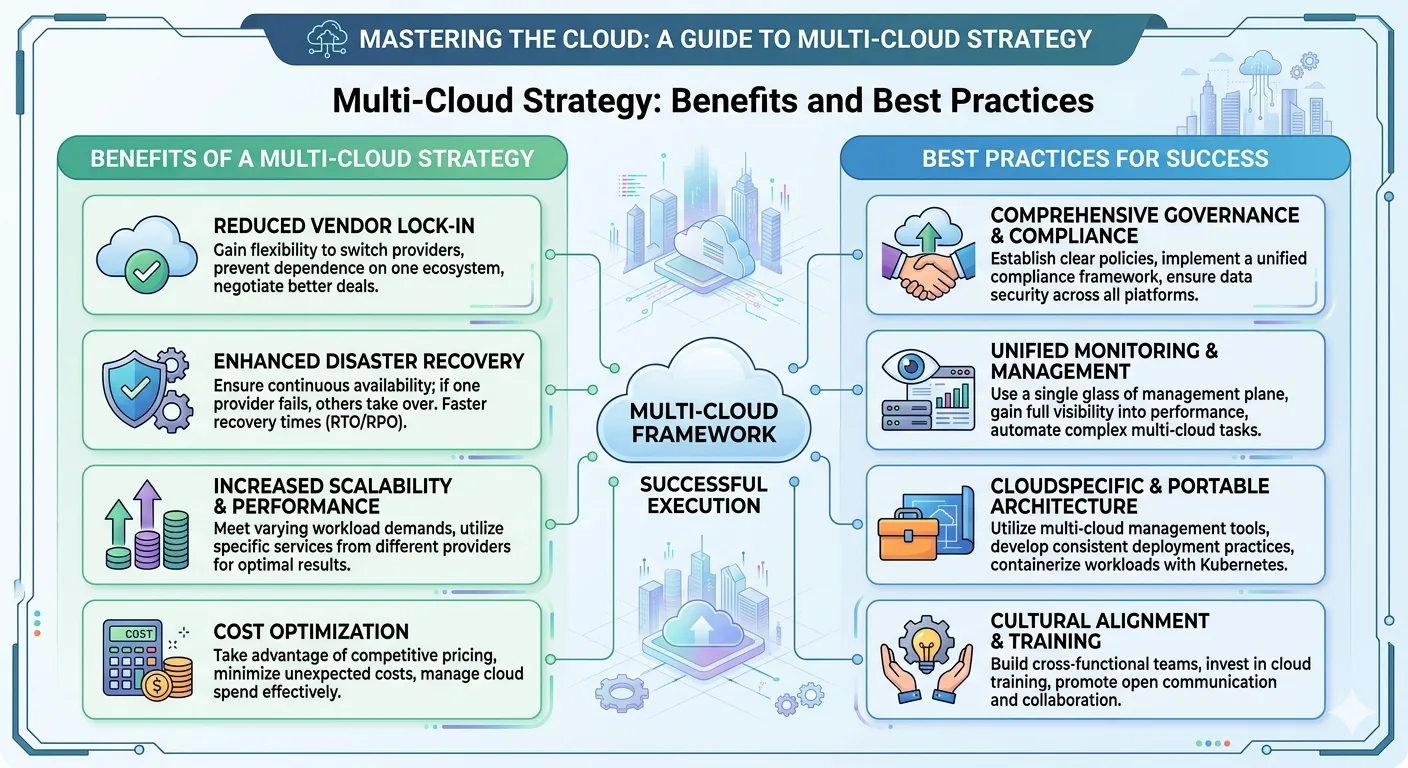
Multi-cloud is no longer a buzzword—it is how modern enterprises stay flexible. Used well, it reduces dependency on a single vendor, improves disaster recovery options, and lets you place each workload where it performs and costs best.
Key benefits
- Resilience: Fail over critical services across providers when one region or platform is disrupted.
- Best-of-breed services: Use Azure, AWS, or specialty platforms for what each does best.
- Negotiation leverage: Avoid hard lock-in while keeping exit paths realistic.
- Data gravity alignment: Keep analytics, AI, and apps close to the data that feeds them.
Best practices that actually stick
- Start with business outcomes, not a checklist of clouds.
- Standardize identity, networking, and landing zones before you scale apps.
- Treat FinOps as a product—tags, budgets, and showback from day one.
- Automate policy: encryption, least privilege, and deployment guardrails everywhere.
- Pick portability where it matters (containers, IaC, open APIs)—not everywhere by default.
Kryptos helps enterprises design multi-cloud roadmaps that balance agility with control—so you gain flexibility without multiplying operational risk.